A stable technical reference point
The first measurement establishes a defensible baseline. Later decisions can be compared with measured state rather than memory, ticket history or assumptions.
Enterprise Failover Cluster Assurance
A cluster assessment is most useful when it becomes a control loop. ClusterTriage establishes the technical baseline, turns deviations into prioritised findings, verifies remediation and keeps configuration drift visible throughout the year.
Why enterprise teams use Assurance
Large cluster estates change continuously: firmware, drivers, virtual switches, VLANs, storage paths, Windows updates, BIOS settings, quorum, VM placement and operational procedures. A clean report in January does not guarantee a clean cluster in October.
The first measurement establishes a defensible baseline. Later decisions can be compared with measured state rather than memory, ticket history or assumptions.
A ticket marked complete does not prove the environment changed. Follow-up measurements verify whether the intended state is actually present.
Configuration drift is exposed between rounds, so small deviations can be addressed before they become accepted production reality.
Measured deviations are assessed in context and prioritised by operational consequence, dependencies and recoverability.
Findings contain the measured state, expected state, deviation, risk, recommendation and reference rather than a dashboard score without explanation.
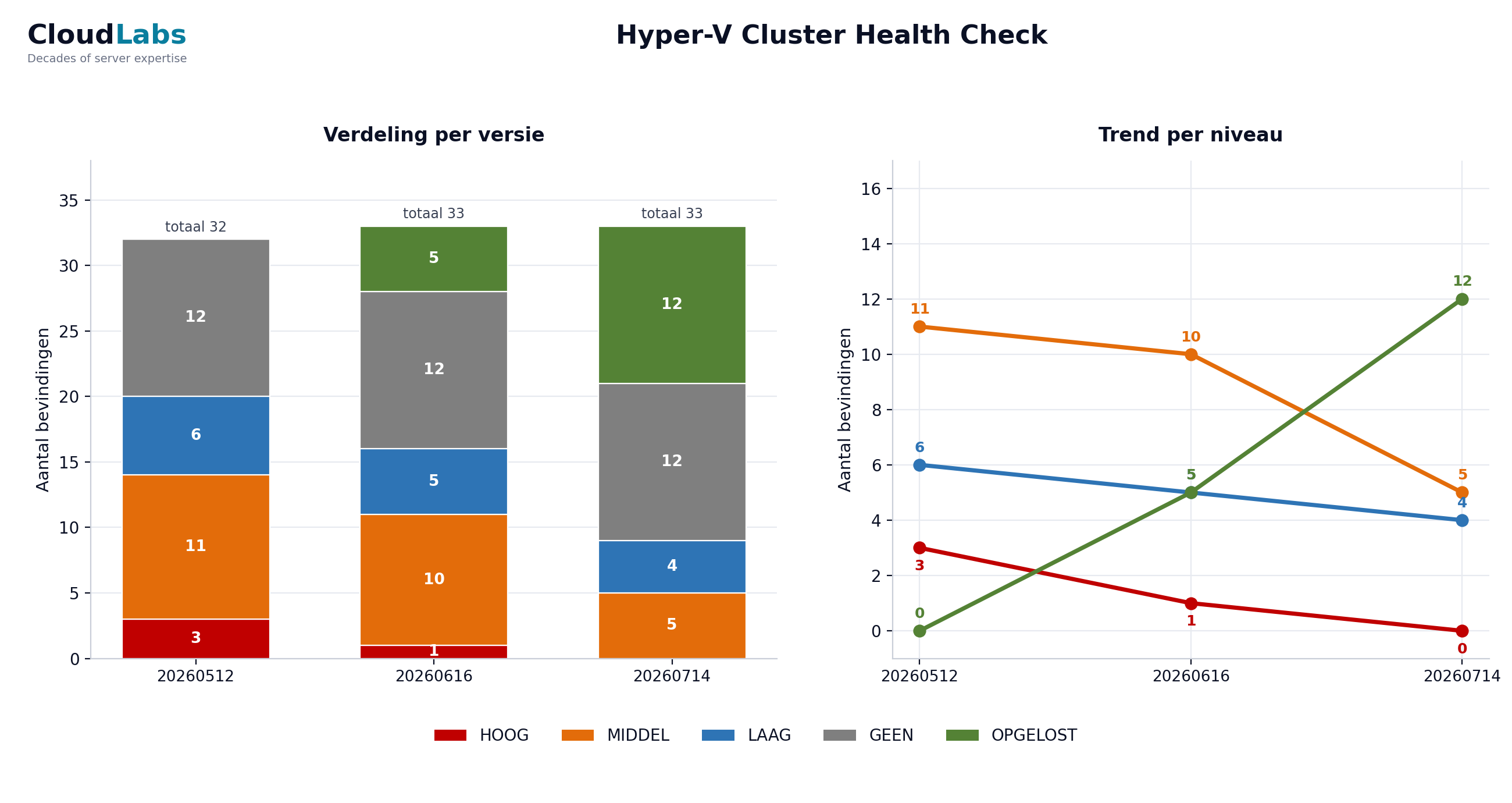
Four rounds make the direction visible: improving, stable or accumulating new risk.
Annual cycle
The first round creates the baseline. Each following round uses the same measurement method to verify remediation and expose new drift.
Not merely finding what is wrong, but proving that it improved — and that it stays improved.
Measure → Analyse → Prioritise → Remediate → Verify → RepeatFull measurement of cluster, hosts and relevant dependencies. This becomes the technical reference point.
The same measurement runs again. Remediation is verified by measured state, not by assumption.
Firmware, networking, storage and host configuration evolve. The third round shows what shifted since Q2.
The fourth measurement closes the year with a current configuration and risk position.
What management gets
Reporting
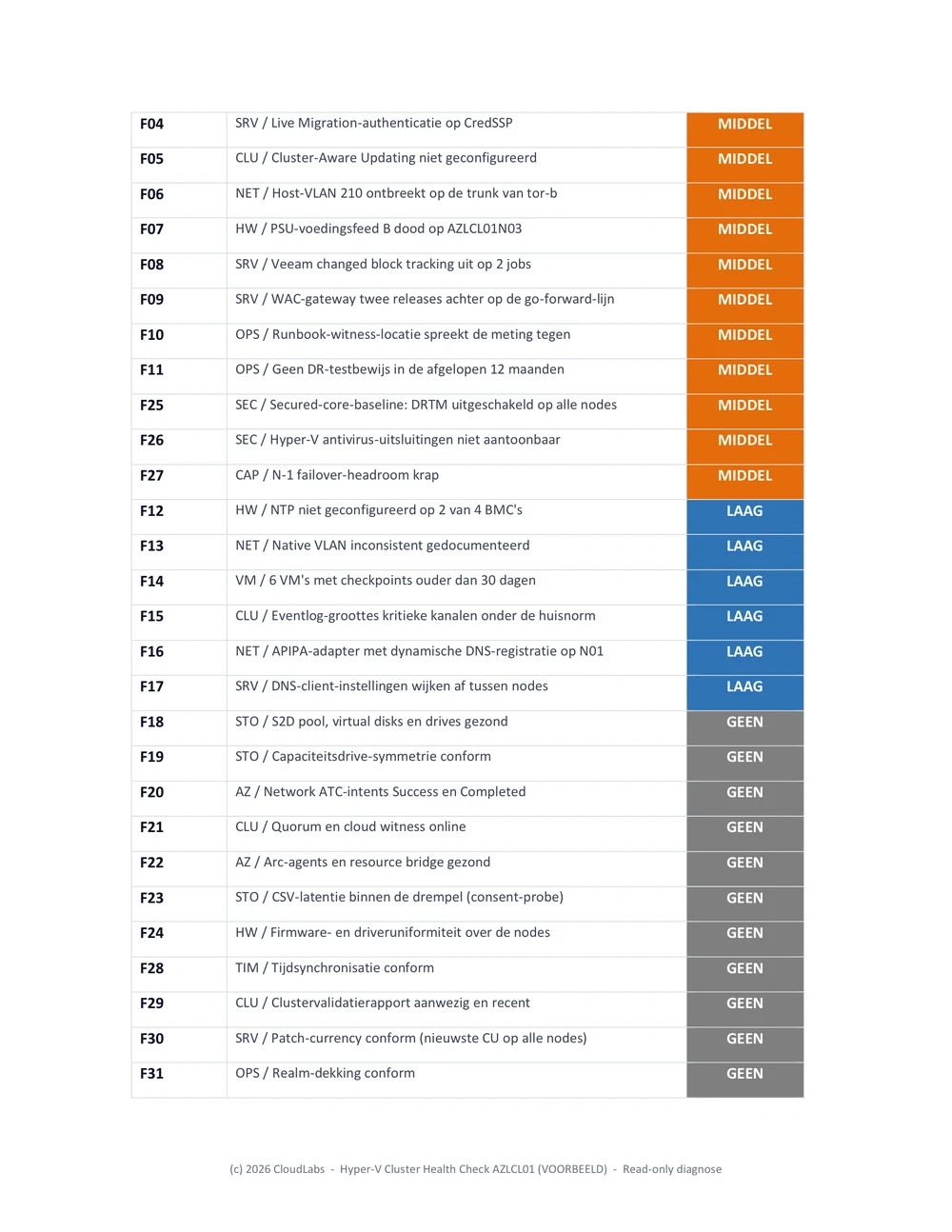
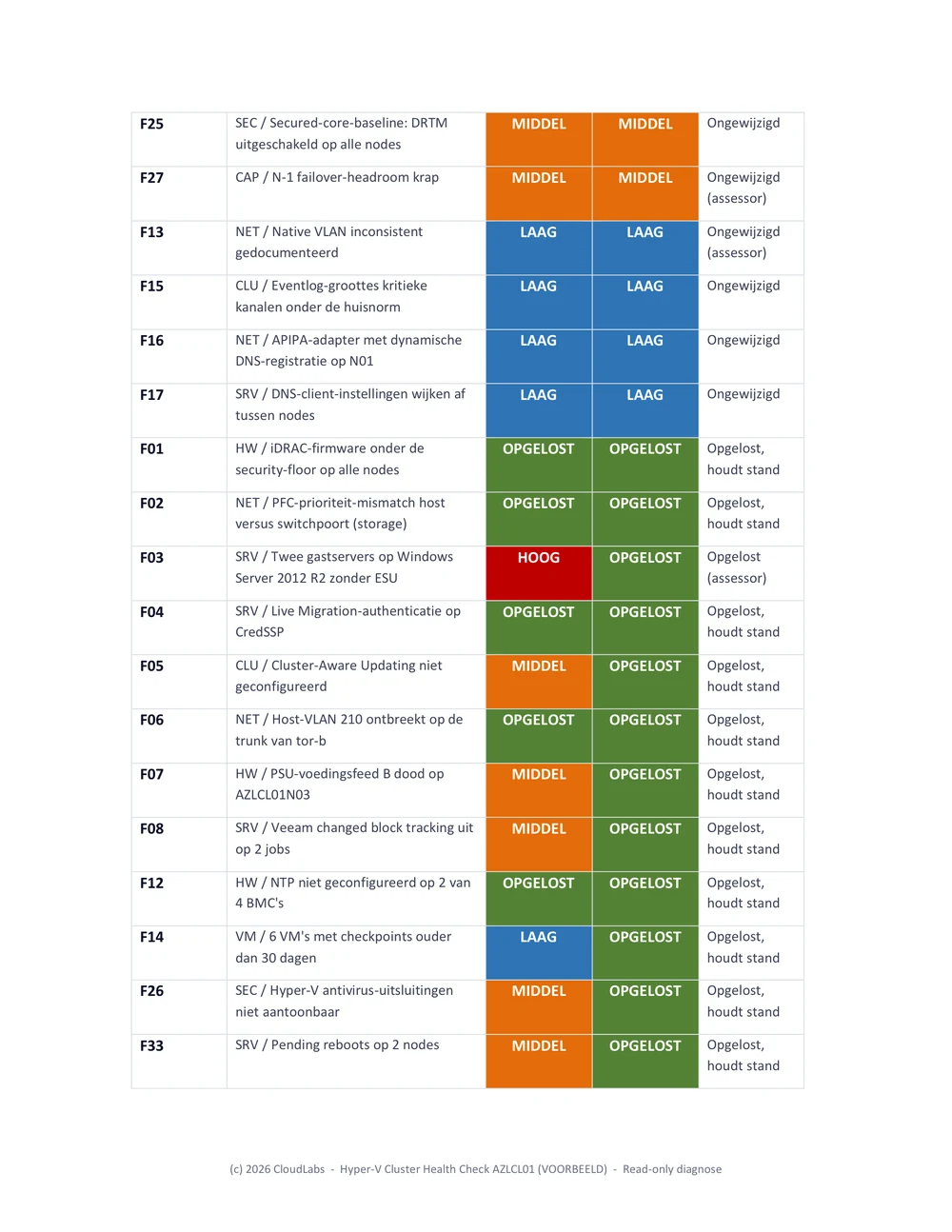
The reports are generated from the same measured state. Click the examples to inspect the output.
ClusterTriage Assurance
Start with a baseline, then use three comparable follow-up measurements to verify remediation and control configuration drift.